Many people don’t even think about employment law when the job is going well. They go to their jobs and get paid, take their vacations, attend a annoying meeting, and proceed to their next task.
Whenever the normal rhythm of working is disrupted it can raise legal questions. The promise of a promotion is not fulfilled. A manager’s behavior becomes increasingly uncomfortable. A worker returns on medical leave but in an entirely different position. An employee’s complaint to HR causes problems and not better. A long career can end abruptly, with a notice of dismissal. It’s often a surprise to employees to see how quickly work-related problems can intersect.
If you have a Workplace Disput doesn’t have an Easy Name
Let’s say an employee has been with the same company for seven years. An employee who has raised concerns over inappropriate remarks from management notices a shift after bringing the matter to the manager’s attention. Meetings are held without them and important assignments disappear. A few months later they are fired from their position.
Is it a matter of harassment, reprisal or discrimination? It is possible that there are more than one legal issue that could be relevant. Someone experiencing workplace harassment Toronto shouldn’t assume that events that follow a complaint are unrelated. In determining the legal remedies available, it is important to think about the sequence of events, as well as specific circumstances.
The job may end without an official notice of termination.
Conflicts over employment may also arise without anyone saying “You’re fired.” A substantial pay cut, a significant demotion, or major alteration of responsibilities could leave an employee wondering whether the employer is effectively replacing the existing employment contract with something completely different.
It can also lead to questions about the Ontario law regarding constructive dismissal. The definition of constructive dismissal is based on facts. Not all frustrating assignments, managerial decisions or workplace changes qualify. Employees considering resignation because of major changes should be careful not to assume they already know the right answer.
If you lose your job There are many questions that arise
When employment actually ends, attention usually turns immediately towards money. It might seem like an easy answer: “How much severance do I deserve?” But there is no answer that will work for all. Employment contracts or applicable laws, duration of service and compensation, along with other aspects, may impact an employee’s rights.
A person looking for a lawyer who handles severance payments close to me might benefit from having their entire ending package analyzed instead of solely focusing on the number of weeks that are offered.
Likewise, wrongful dismissal Ontario doesn’t simply mean an employee believes the termination was unfair. Legal review could include determining whether the employee received adequate notice or compensation and what influence the employment contract is able to have on these obligations.
Certain employees are subject to a different legal system
One thing that’s difficult to remember is the nature and size of your employer. Ontario’s employment law is the main source of regulation for a lot of employees. Certain industries, however, are federally controlled. Certain industries are regulated under federal law.
The employees who are unionized could encounter issues related to human rights, duties of fairness, and representation. Knowing the law that governs is an important element in understanding an employment dispute.
Employment Law is about the whole relationship
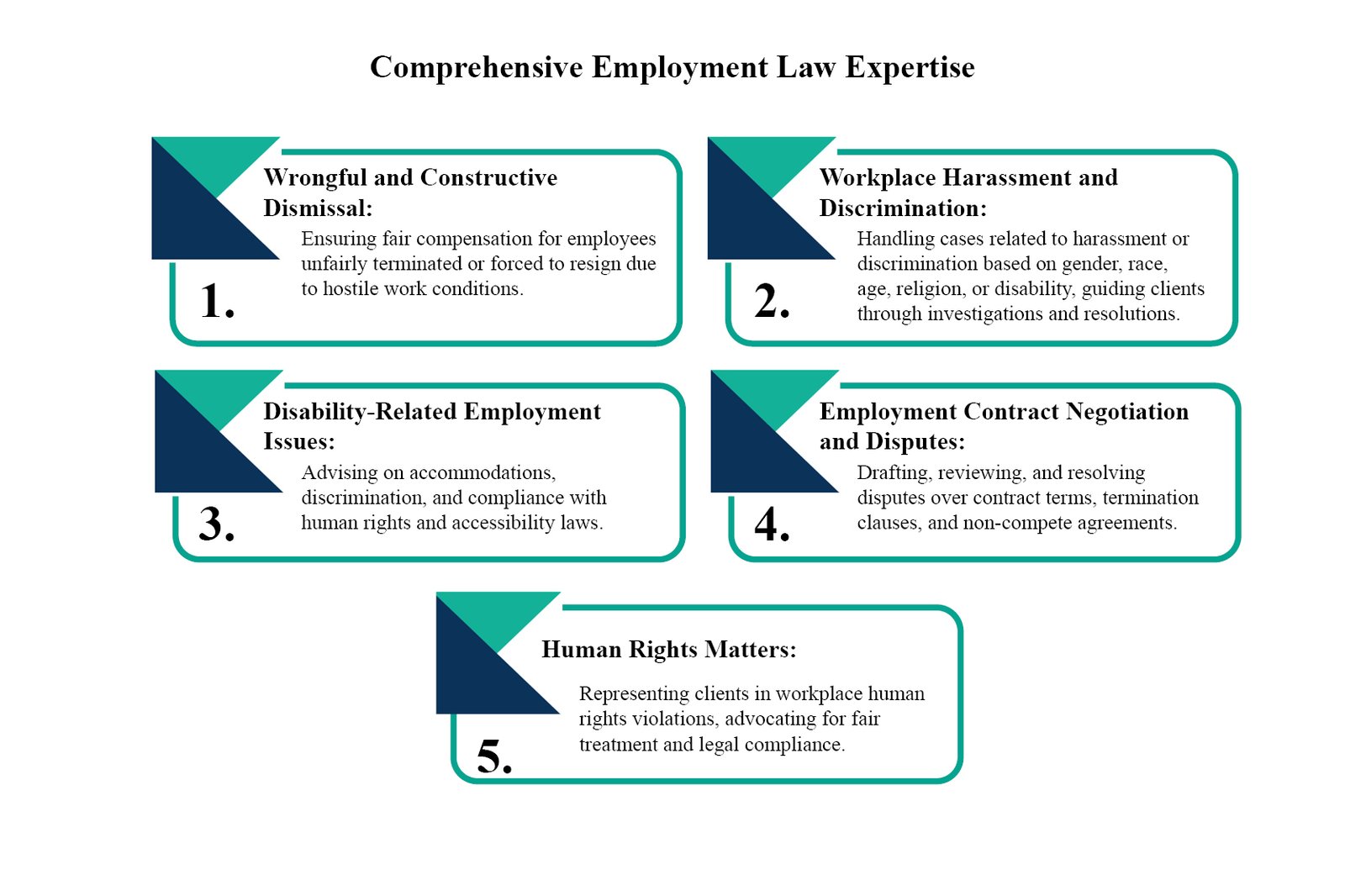
HTW Law is a Toronto employment law firm, serving the Greater Toronto Area and handling the provincial employment laws across Ontario. Its practice includes dismissals that are unlawful and constructive of employees, severance from employment, workplace harassment or sexual harassment, discrimination the discrimination against disabled people, HRTO and OLRB matters and related human rights concerns. The firm helps in certain instances involving federally-regulated employees across Canada.
Disputs in the workplace aren’t always clean enough to fit under one umbrella. What starts as a disagreement over work conditions can turn into a harassment complaint or even a change of work, and then eventually, termination.
Understanding the connections between these events can be just as important as understanding what happened during the employee’s last day.